The Russo-Ukrainian Conflict: A Complex History and Ongoing Crisis
The Russo-Ukrainian conflict is a protracted and multifaceted crisis with deep historical roots and significant geopolitical implications. While the current phase escalated dramatically in 2014 and reached a new level of intensity with Russia’s full-scale invasion in February 2022, the tensions between the two nations stretch back centuries.
Historically, Ukraine and Russia share a complex relationship, intertwined by cultural, linguistic, and religious ties. Both trace their origins to Kyivan Rus’, a medieval state centered in present-day Kyiv. However, over time, distinct national identities emerged. Ukraine experienced periods of independence and autonomy, while Russia consolidated its power, often seeking to exert control over its neighbor.
The 20th century witnessed significant upheaval for Ukraine. After a brief period of independence following World War I, much of Ukraine was incorporated into the Soviet Union. The Holodomor, a man-made famine in the 1930s orchestrated by Stalin’s regime, resulted in the deaths of millions of Ukrainians and remains a source of deep resentment. Following the collapse of the Soviet Union in 1991, Ukraine declared its independence, a move initially recognized by Russia.
However, tensions persisted. Russia viewed Ukraine as being within its sphere of influence and opposed its westward trajectory, particularly its aspirations to join NATO and the European Union. These concerns were fueled by the presence of a significant Russian-speaking population in eastern and southern Ukraine, which Russia claimed to be protecting.
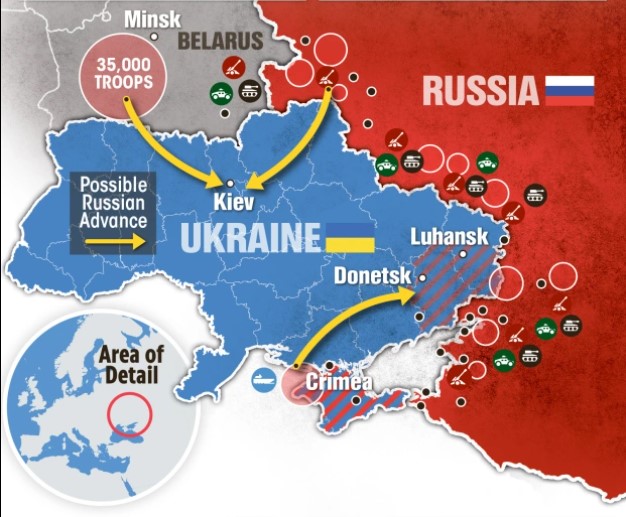
The annexation of Crimea by Russia in March 2014 marked a turning point. Following the pro-Western Euromaidan Revolution in Kyiv, Russia seized control of the Crimean Peninsula, a region with a majority-Russian population, after a controversial referendum. Simultaneously, Russia began supporting separatists in eastern Ukraine’s Donbas region, leading to a protracted war that has claimed thousands of lives and displaced millions.
The Minsk agreements, aimed at achieving a ceasefire and political resolution in Donbas, failed to fully resolve the conflict. Sporadic fighting continued along the line of contact, and political progress remained stalled. Throughout this period, Russia consistently denied direct involvement in the conflict, despite overwhelming evidence to the contrary.
Russia’s full-scale invasion of Ukraine in February 2022 represents a significant escalation of the conflict. Russia launched a multi-pronged attack, targeting major cities and infrastructure across Ukraine. The invasion has been widely condemned by the international community, leading to unprecedented sanctions against Russia and widespread military and humanitarian assistance to Ukraine.
The conflict has had devastating consequences for Ukraine, resulting in widespread destruction, displacement, and loss of life. It has also had profound global implications, disrupting supply chains, exacerbating energy and food insecurity, and reshaping the geopolitical landscape. The future of the conflict remains uncertain, but it is clear that it will continue to have a significant impact on Ukraine, Russia, and the world for years to come.
 2984×1683 ukraine russia conflict from www.usatoday.com
  700×439 az orosz ukran konfliktus resz ukrajna tortenelmi attekintese from juratus.elte.hu
  583×328 russia frozen conflicts europe east west from europebetweeneastandwest.wordpress.com
  1920×1080 russia opens front ukraine conflict from www.axios.com
  5760×3840 key points russias conflict ukraine bt from home.bt.com
  1200×630 russia ukraine international armed conflict international committee from www.icrc.org
  1080×720 ukraine conflict damaging russian economy ft reuters from www.reuters.com
  690×387 slovak pm calls russias aggression ukraine frozen conflict from www.pravda.com.ua
  1920×1080 analysts remorse russo ukrainian conflict visegrad insight from visegradinsight.eu
  1024×682 ukraine conflict looms turning point russias uneasy from insideclimatenews.org
  1200×800 eyes ukraine conflict licking from www.independent.co.uk
  724×1024 orosz ukran konfliktus archives filmdroid from filmdroid.hu
  361×510 xpress az orosz ukran konfliktus hattere from www.xpress.hu
  1240×898 az orosz ukran konfliktus masodik evfordulojan ki van folenyben from vilaghelyzete.substack.com
  2400×1600 eszkalalodik az orosz ukran konfliktus from www.origo.hu
  1000×523 fait accompli az orosz ukran konfliktus holdblog from hold.hu
  1000×524 az orosz ukran konfliktus gazdasagi hatasai holdblog from hold.hu
  1920×1080 fontos evfordulokhoz erkezett az orosz ukran konfliktus portfoliohu from www.portfolio.hu
  1920×1080 orosz ukran konfliktus mit hoz jovo scruton from scruton.hu
  1125×633 orosz ukran konfliktus portfoliohu from www.portfolio.hu
  626×517 orosz ukran konfliktus osszefoglalo folyamatosan frissul wt info from wtinfo.hu
  1200×675 orosz ukran konfliktus okoktol lehetseges kovetkezmenyekig from infostart.hu
  1536×864 pillanatokon belul nemzetkozive valhat az orosz ukran konfliktus hirado from hirado.hu
  908×648 orosz ukran konfliktus haboru alapveto szabalyai ludovikahu from www.ludovika.hu
  1200×675 orosz ukran konfliktus moszkvanak van mitol tartania infostarthu from infostart.hu
  1686×1125 ukran orosz konfliktus lesz haboru kiszo hatter from kiszo.net
  1108×739 index kulfold oroszorszag haboruja ukrajnaban az index penteki from index.hu
  1500×843 terkepen az orosz ukran haboru hirekmahu from hirekma.hu
  800×562 putyin soha nem lesz haborus konfliktus oroszorszag es ukrajna kozott from szekelyfold.ma
  840×582 orosz ukran helyzet mindorokke from offforever.blog.hu
  1254×781 nyt az usa arra szamit hogy az ukran konfliktus telen lelassul from oroszhirek.hu
  1200×800 az orosz ukran haboru napja friss hirek vilaggazdasag from www.vg.hu
  1578×1151 orosz ukran haboru ez kreml hivatalos valasza az orosz from www.blikk.hu
  2560×1707 az orosz ukran haboru legfrisebb fejlemenyei patria radio from patria24.rtvs.sk